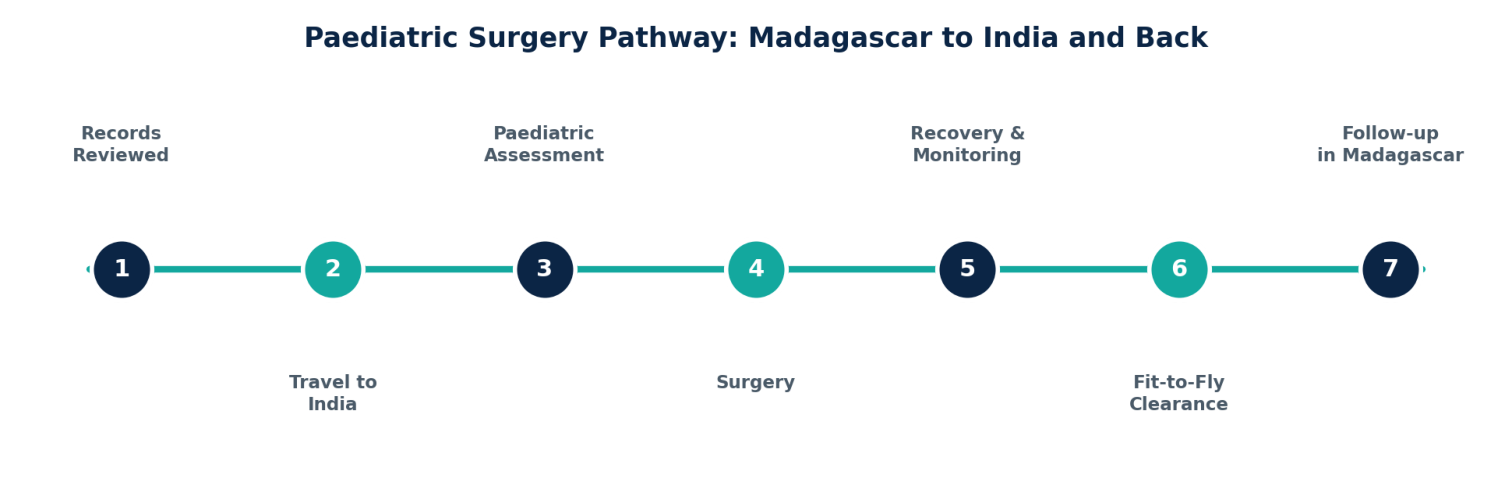
Paediatric surgery in India can suit Madagascar families when a paediatric surgeon has confirmed the diagnosis and explained whether surgery is genuinely needed and at what age — many childhood conditions are first observed or treated without an operation. India offers dedicated paediatric surgical, anaesthesia and neonatal/paediatric intensive care teams, including laparoscopic surgery for selected conditions. Plan for recovery in India, paediatric fit-to-fly clearance, complete records and structured follow-up in Madagascar.
Guide Roadmap19 topics · 5 stages · tap to explore
For families in Madagascar whose child has a congenital condition, injury, or other surgical problem, finding the right paediatric surgical team is one of the most important decisions a parent can make. India offers dedicated paediatric surgical and paediatric anaesthesia teams experienced in treating infants and children, across general paediatric surgery, paediatric urology, paediatric orthopaedics and neonatal surgery.
For a family travelling from Madagascar, the important question is not simply “Can this be treated in India?” The more useful questions are: What exactly is my child’s diagnosis? Is surgery genuinely needed, and at what age? What are the risks specific to a child? How long will recovery take? And when will my child be fit enough to make the journey back to Madagascar? This guide explains the clinical aspects of paediatric surgery in India from the perspective of Madagascar families.
1What Is Paediatric Surgery?
Paediatric surgery covers surgical conditions specific to infants, children and adolescents, including congenital abnormalities present from birth, conditions that develop in childhood, and injuries. Children are not simply small adults — their anatomy, physiology, anaesthesia requirements and recovery patterns differ significantly by age, which is why paediatric-specific surgical and anaesthesia expertise matters as much as the operation itself.
2Common Conditions for Which Madagascar Families May Consider Paediatric Surgery in India
Inguinal Hernia and Hydrocele
Common in infants and children, usually treated with a relatively straightforward day-case or short-stay surgical repair.
Undescended Testis
Best corrected surgically at a specific early age to protect future fertility and reduce cancer risk.
Congenital Gastrointestinal Abnormalities
Conditions such as intestinal malrotation, atresia, or Hirschsprung’s disease may require surgery, sometimes urgently in newborns.
Congenital Urological Abnormalities
Conditions such as posterior urethral valves or ureteropelvic junction obstruction may require surgical correction.
Appendicitis
A common paediatric surgical emergency, typically treated with laparoscopic appendectomy.
Congenital Chest Wall and Diaphragm Conditions
Conditions such as diaphragmatic hernia or pectus deformities may require specialised surgical correction.
Paediatric Tumours
Certain childhood tumours require specialised paediatric surgical oncology, often combined with chemotherapy.
Cleft Lip and Palate
Surgical correction, sometimes in staged procedures, performed at specific recommended ages for the best functional and cosmetic outcome.
3Does Every Condition Need Surgery?
No. This is one of the most important principles for a Madagascar family considering travelling overseas. Depending on the diagnosis, appropriate management may include:
Observation, since some conditions (such as small hernias in very young infants or certain hydroceles) may resolve without surgery
Medication for selected conditions
Timed surgery at the age when outcomes are best, rather than immediate surgery
Nutritional or supportive management before surgery is considered
A diagnosis on scan or examination does not automatically mean immediate surgery is necessary. A paediatric surgeon should advise on whether surgery is needed at all, and if so, the optimal age and timing for the specific condition.
4When May Surgery Be Recommended?
The condition will not resolve on its own and is causing symptoms or risk (such as obstruction or infection)
There is a specific optimal age window for correction (such as undescended testis or certain hernias)
The condition is an urgent surgical emergency (such as appendicitis or bowel obstruction)
A tumour requires surgical removal or biopsy
Growth or development is being affected by the untreated condition
5Warning Signs Madagascar Families Should Not Ignore Before Travelling to India
Persistent vomiting, especially if green (bilious) in an infant
Severe abdominal pain or a visibly distended abdomen
A hernia that becomes hard, painful and cannot be gently reduced
High fever with abdominal pain
Sudden inability to pass stool or urine
Lethargy or poor feeding in an infant with any of the above
A child with any of these warning signs should be seen urgently by a local doctor or emergency department in Madagascar rather than waiting to arrange overseas travel, as several of these can indicate a surgical emergency.
6Tests Usually Required Before Paediatric Surgery
Ultrasound
Often the first and safest imaging test in children, avoiding radiation exposure.
Blood Tests
Assess infection markers, blood counts and general fitness for anaesthesia.
MRI (Where Needed)
Used selectively, particularly for certain congenital or neurological conditions, sometimes requiring sedation in young children.
Paediatric Anaesthesia Assessment
A specific evaluation of fitness for anaesthesia appropriate to the child’s age and any other medical conditions.
Growth and Nutritional Assessment
Particularly relevant for infants and children with congenital or gastrointestinal conditions.
7Major Types of Paediatric Surgery Available in India
Laparoscopic Paediatric Surgery
Minimally invasive techniques adapted for children’s smaller anatomy, used for appendicitis, some hernias, and selected abdominal conditions.
Neonatal Surgery
Specialised surgery for newborns with congenital abnormalities, requiring dedicated neonatal intensive care support.
Paediatric Urological Surgery
Correction of congenital urinary tract abnormalities, often with long-term functional considerations.
Paediatric Orthopaedic Surgery
Correction of congenital or developmental bone and joint conditions in children.
Reconstructive Paediatric Surgery
Procedures such as cleft lip/palate repair, performed at specific ages for optimal outcomes.
Paediatric Oncological Surgery
Surgical treatment of childhood tumours, typically coordinated with paediatric oncology.
Can the Surgeon Review My Child's Scans While We Are Still in Madagascar?
For many congenital conditions, the timing of surgery matters as much as the operation itself. Some conditions are best corrected in the first weeks of life, others benefit from waiting until a specific developmental stage. A paediatric surgical team should explain not just what operation is needed, but why a particular age or timing has been recommended for your child specifically.
9Paediatric Anaesthesia and Perioperative Care
Children, particularly infants, require anaesthesia tailored to their size, physiology and specific condition, delivered by paediatric anaesthesia specialists. Advanced Indian paediatric centres also provide dedicated neonatal and paediatric intensive care. A useful question for Madagascar families is not just “Who is the surgeon?” but “Who will manage my child’s anaesthesia, and what paediatric intensive care support is available if needed?”
10Risks and Possible Complications of Paediatric Surgery
Infection
Bleeding
Anaesthesia-related complications specific to children
Delayed wound healing
Recurrence of the condition (e.g. hernia)
Need for further surgery as the child grows
Feeding or nutritional difficulties after gastrointestinal surgery
Scarring
The risk profile of a straightforward hernia repair is very different from that of complex neonatal or oncological surgery. Parents should request procedure-specific and age-specific risk information rather than relying on generic statistics.
11Recovery After Surgery
Early Phase
Pain control appropriate to the child’s age
Wound monitoring
Monitoring feeding and hydration
Early mobilisation where appropriate
Parental presence and comfort measures
Following Weeks
Progressive return to normal activity and play
Wound care
Nutritional support where relevant
Medication adjustment
Monitoring growth and development
Longer-Term Recovery
Most children recover well from common paediatric procedures within a few weeks, though conditions requiring staged surgery or long-term follow-up (such as certain congenital abnormalities) may need monitoring for years as the child grows.
12Recovery Support for the Child and Family
Age-appropriate pain management
Nutritional support and feeding guidance
Physiotherapy where relevant (e.g. after orthopaedic surgery)
Developmental monitoring
Psychological support for the child and family
Guidance on return to school and normal activities
13When Can Patients Return to Work?
This section applies to parents/caregivers rather than the child: time away from work depends on the child’s procedure and recovery. A straightforward day-case procedure may need only a few days away from work, while major neonatal or reconstructive surgery may require several weeks of a parent’s presence for recovery and follow-up.
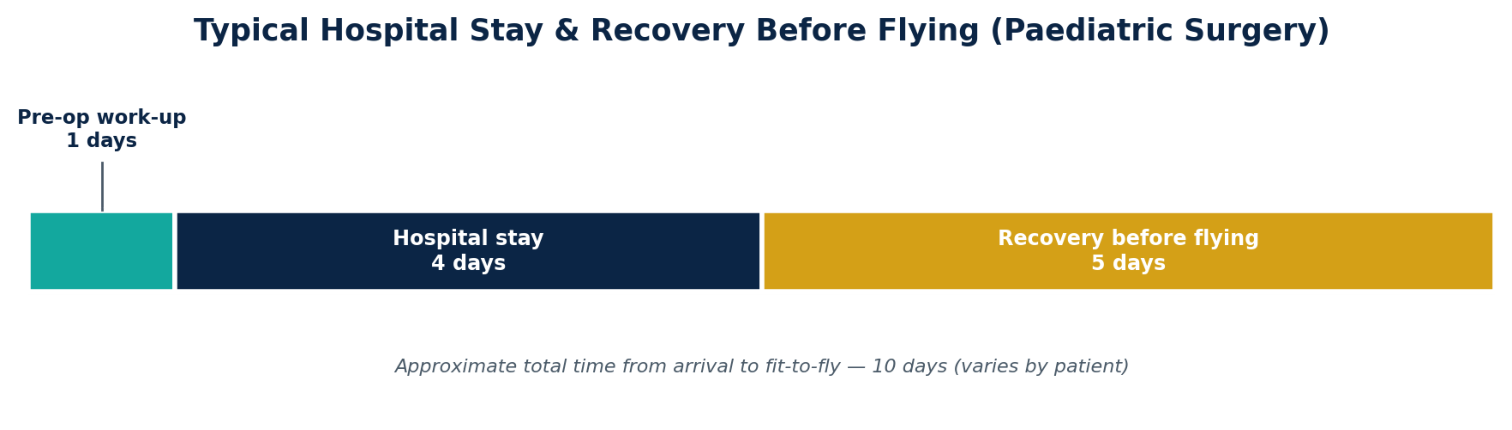
14How Long Should a Madagascar Family Remain in India After Paediatric Surgery?
The appropriate period depends on the child’s age, the procedure performed, wound healing, feeding stability, and risk of early complications. A Madagascar family should not book an inflexible return flight based solely on the expected hospital discharge date, since a child’s readiness for travel is judged separately from readiness for hospital discharge.
15Flying Back to Madagascar After Paediatric Surgery in India
Paediatric fit-to-fly clearance from the treating surgical team
Feeding and hydration stability
Wound assessment before flying
Pain management plan for the journey
Medication timing
Comfort items and entertainment for the child
Suitable seating and any required medical equipment
Infants and children recovering from major surgery may need specific clearance regarding cabin pressure changes and oxygen needs before flying.
16What Medical Information Madagascar Families Should Bring Back from India
17Follow-Up in Madagascar After Paediatric Surgery in India
Wound assessment
Growth and development monitoring
Imaging if clinically indicated
Medication review
Coordination with local paediatrician
Planning for any staged future surgery
18How Successful Is This Surgery?
There is no meaningful single “success rate” for paediatric surgery. Outcomes depend on the specific condition, the child’s age and overall health, and the complexity of the procedure. The expected outcome of a routine hernia repair cannot reasonably be compared with complex neonatal or oncological surgery.
Parents should be cautious about websites offering one universal success percentage.
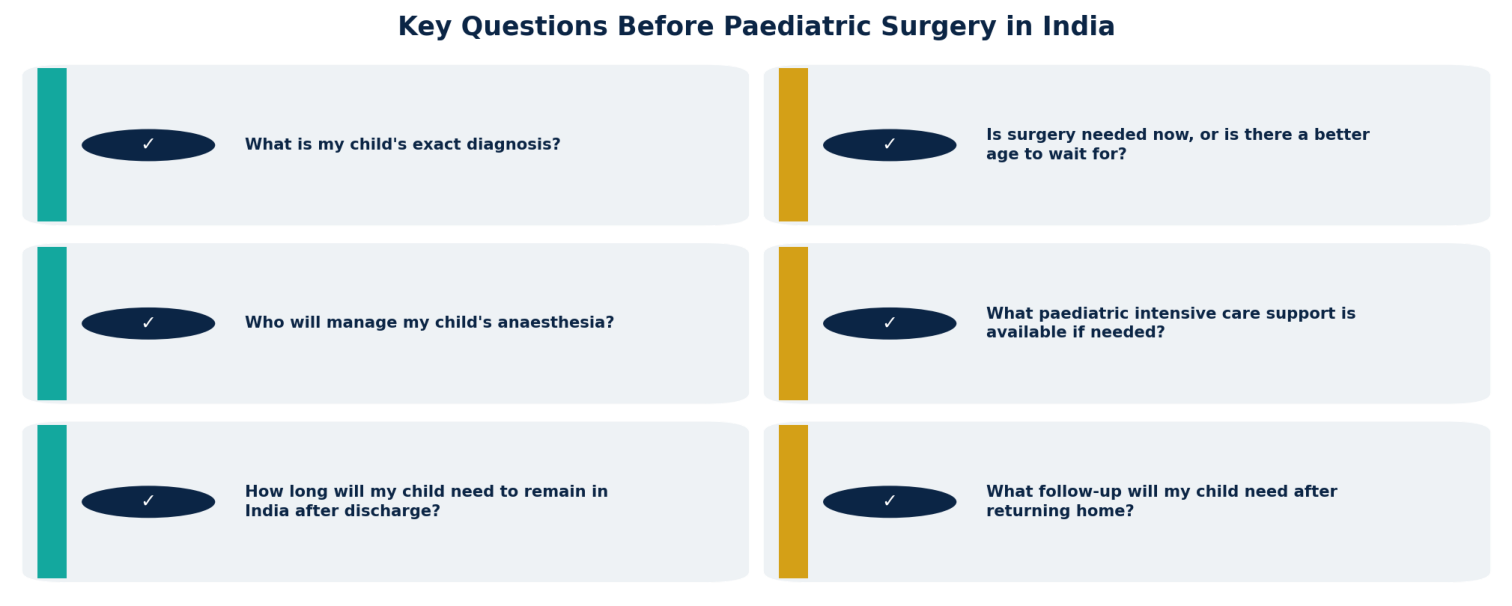
19Questions Madagascar Patients Should Ask Before Agreeing to Surgery in India
What is my child’s exact diagnosis?
Is surgery needed now, or is there a better age to wait for?
What are the alternatives to surgery?
What are the specific risks for a child of my child’s age?
Who will manage my child’s anaesthesia?
What paediatric intensive care support is available if needed?
How long will my child be hospitalised, and how long in India afterward?
When will my child be fit to fly back to Madagascar?
What follow-up will my child need after returning home?
Will my child need further surgery as they grow?
Frequently Asked Questions About Paediatric Surgery for Madagascar Patients in India
Can my child’s scans be reviewed before we travel from Madagascar?
Often, yes. Digital imaging and reports can be reviewed remotely for an initial opinion, though a definitive plan usually requires in-person evaluation.
Does every hernia or hydrocele in a baby need surgery?
Not always immediately; some hydroceles resolve on their own in the first year, though hernias generally do need surgical repair.
Can a parent stay with my child in hospital?
Most paediatric units accommodate a parent staying with the child; this is worth confirming with the specific hospital in advance.
Is laparoscopic surgery available for children in India?
Yes, many paediatric centres offer laparoscopic surgery for appropriately selected conditions and age groups.
How soon can we fly back to Madagascar?
There is no universal timeframe. The paediatric surgical team should clear your child for travel based on recovery, feeding, and wound healing.
What if my child needs more than one surgery?
Some congenital conditions are treated in planned stages; the team should explain the full expected sequence in advance.
Should we choose a hospital based on its technology alone?
No. Paediatric surgeon and anaesthesia experience with your child’s specific age and condition, and neonatal/paediatric intensive care support, remain fundamental.
Key Takeaway for Madagascar Patients Planning Paediatric Surgery in India
Travelling from Madagascar to India for paediatric surgery is a significant decision for any family. The most important step is obtaining a precise diagnosis and understanding not just what surgery is needed, but why a particular age or timing has been recommended for your child. For a Madagascar family, the plan should also address paediatric-specific anaesthesia and intensive care support, recovery in India, fitness for travel, and a clear pathway for follow-up and any staged future surgery after returning home.
Citation Block: Madagascar Patients — Paediatric Surgery in India
Field
Details
Article / Topic
Paediatric Surgery in India for Madagascar Patients — Complete Clinical & Surgical Guide
Primary Patient Group
Madagascar families whose child has a congenital condition, injury or other surgical problem
Key Clinical Principle
Confirm the diagnosis, whether surgery is needed and the right age for it before choosing any operation
Conditions Covered
Inguinal hernia and hydrocele, undescended testis, congenital gastrointestinal and urological abnormalities, appendicitis, chest wall/diaphragm conditions, tumours, cleft lip and palate
Procedures Covered
Laparoscopic, neonatal, urological, orthopaedic, reconstructive and oncological paediatric surgery
Tests Before Surgery
Ultrasound, blood tests, MRI where needed, paediatric anaesthesia assessment and growth/nutritional assessment
Anaesthesia & Intensive Care
Paediatric-specific anaesthesia with neonatal/paediatric intensive care support where required
Typical Hospital Stay
About 2–5 days after major paediatric surgery, depending on the procedure and recovery
Travel Home
Stay in India until paediatric fit-to-fly clearance; take the discharge summary, operative report and imaging back to Madagascar
Key Decision Factor
Right diagnosis, right age and timing, experienced paediatric surgical and anaesthesia team, and a clear follow-up plan in Madagascar
Madagascar Patients — Ready to Take the First Step?
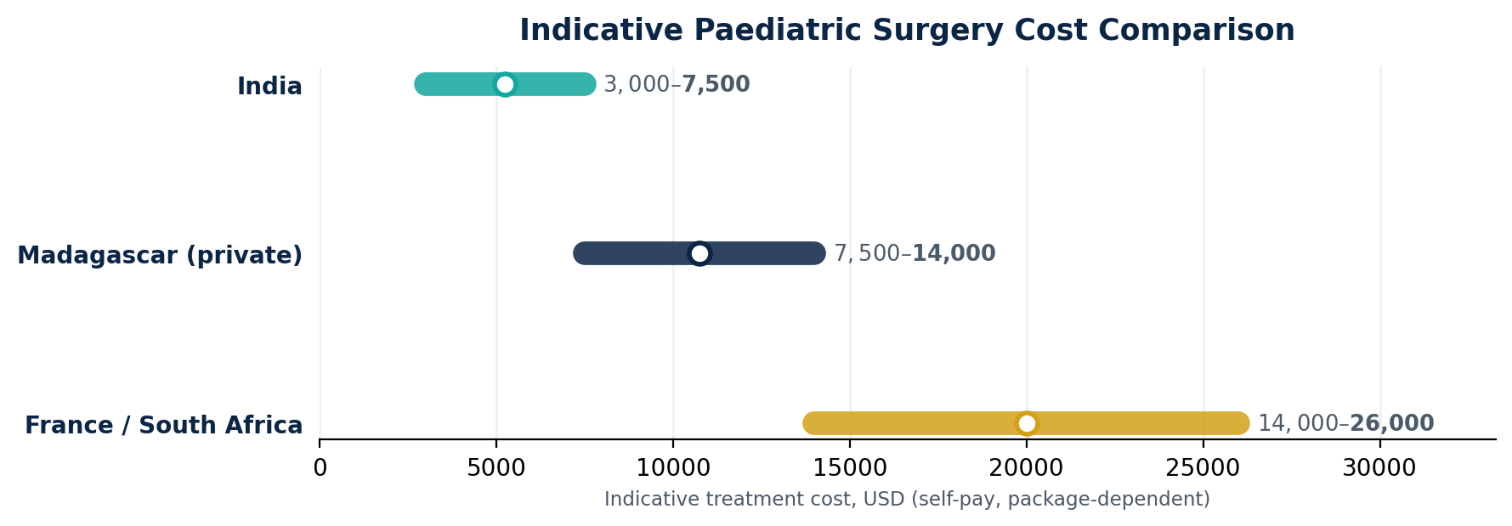
Share your child's medical reports from Madagascar with our advisory team today and get a MEDICAL CONSULTATION, an indicative cost estimate in US$, and complete support — from your flight out of Antananarivo to your child's recovery in India and follow-up back home.

 Clinical Guide · Part 1 of 5